A real studio, not a slot machine.
One prompt starts a show — but what keeps it a show is the studio underneath: per-clip control, a director-grade editor, and a pipeline built to keep your cast, props and look locked across every episode.
A real editor, not a slot machine.
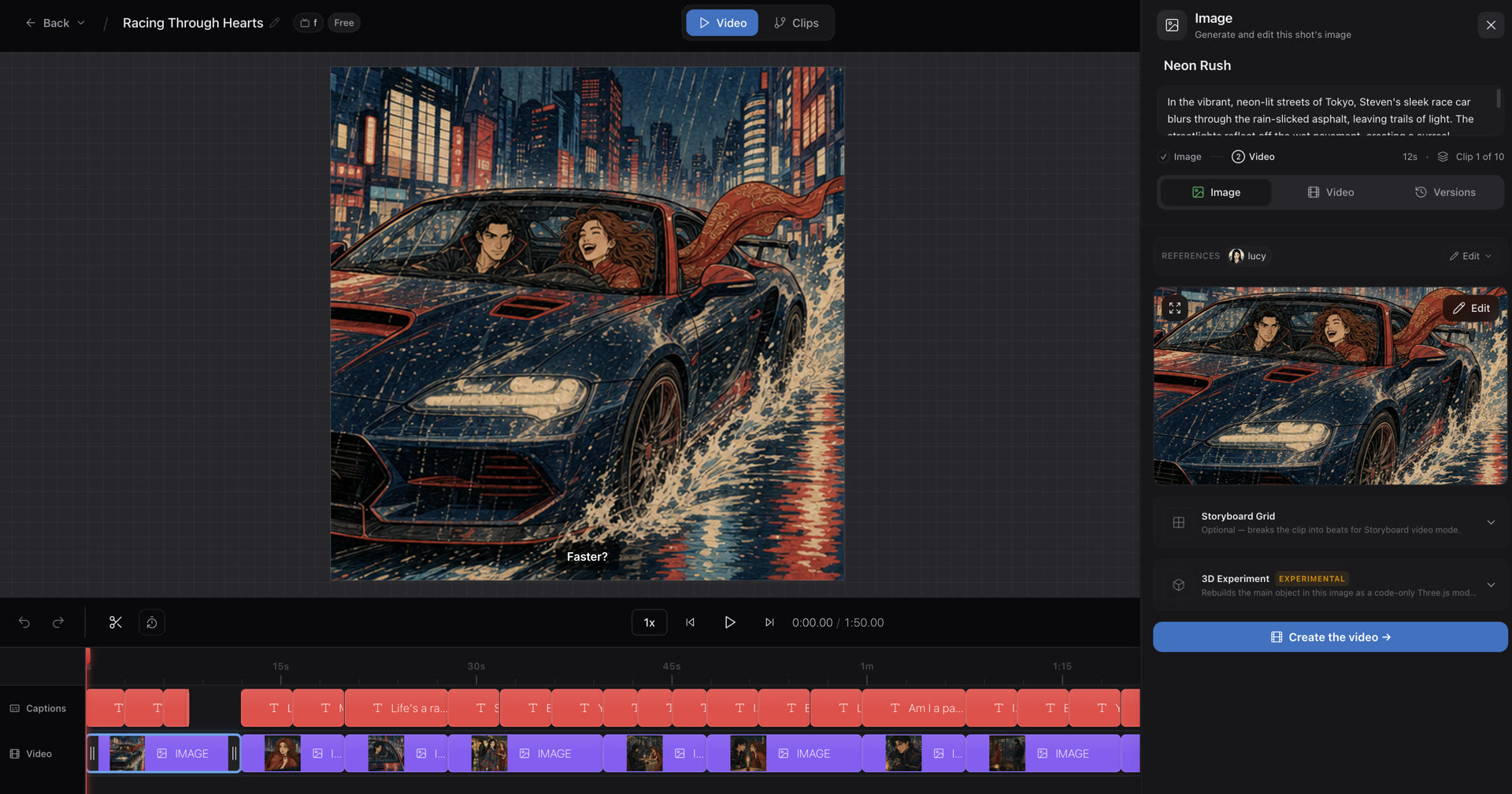
Per-clip control
Regenerate any shot, swap between versions, trim on a timeline — the episode is yours down to the frame.
Your own footage
Upload video or images into any clip. Mix AI shots with real ones in the same episode.
AI co-editor
Tell the editor what to change in plain language — it edits the actual clips, not just the prompt.
How your cast stays themselves
Character drift is the failure mode of AI video. Every clip we generate runs through three layers that hold identity together.
Character sheets, per style
Every character gets a reference sheet in your show's exact art style — face, hair, wardrobe. Episodes inherit the matching sheet, so a style change never mutates your cast.
References on every shot
Each clip is generated against its storyboard plus the actual reference images of the characters, location and props in frame — identity comes from images, not from text the model can reinterpret.
Scene-to-scene continuity
Transitions are planned against the neighboring clips: what carries over, who enters, and what the model is allowed to show — so cuts connect instead of resetting.
Same cast. Every episode.
Keep faces, outfits, and voices consistent across every episode.
From “Pepe in the Matrix” — a Yoh Original
Hand your brief to the network.
Find the team, make the film, approve the work, release the money — one place, escrow the whole way.